4 years of GPU expansion, what now ?
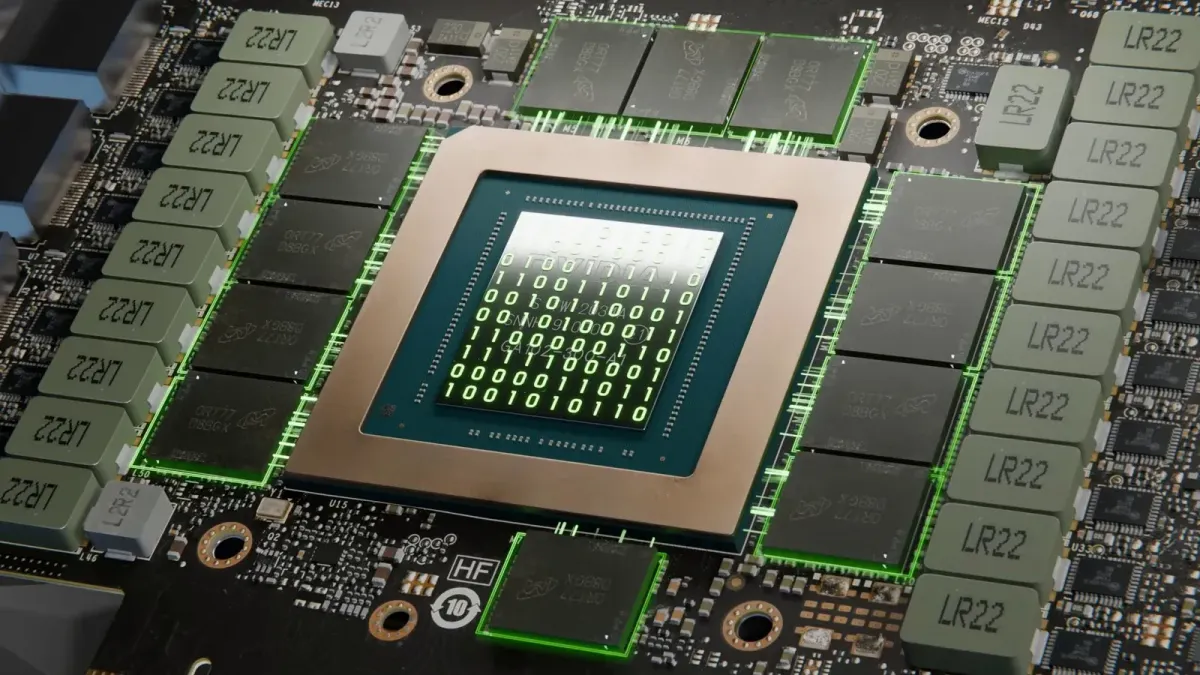
During the past 4 years and the emergence of AI new capabilities. Hyperscalers were building strong computing power by buying GPUs, this sent NVIDIA and later AMD to stellar levels with NVIDIA being now, well established as the largest company in the world.
Since 2022, NVIDIA has been shipping a new GPU architecture roughly every year: Hopper (2022), Blackwell (2024–2025), and Rubin (H2 2026), each representing a genuine architectural step-change rather than a spec refresh. The H100 established the foundation for large-scale LLM training, while the H200 was a more targeted upgrade, swapping in faster HBM3e memory to push bandwidth from 3.35 to 4.8 TB/s on the same die. Blackwell was the real leap: a chiplet design on TSMC 4NP, doubled memory capacity, FP4/FP6 precision support, and fifth-generation NVLink, delivering up to 2.2x training and 4x inference performance over H100. Vera Rubin, arriving H2 2026 on TSMC 3nm, pushes further still — 288 GB of HBM4, 13 TB/s bandwidth, and 3.6 ExaFLOPS per NVL144 rack. Each generation has also commanded a higher price: from ~$5,000 for a P100 to $25,000, $30,000 for an H100 and an expected $35,000–$40,000 for Blackwell, a 7x price increase over eight years, against a 1,000x performance gain.
AMD is pursuing a different but increasingly credible path. Rather than competing with NVIDIA chip-for-chip on training dominance, AMD has positioned its MI-series accelerators as the inference and total-cost-of-ownership alternative. The MI400, featuring 432 GB of HBM4 and nearly 20 TB/s of bandwidth, is a serious contender for large-scale inference workloads, and the endorsement from OPENAI and META each committing six gigawatts of AMD infrastructure, signals that the market is no longer treating AMD as a distant second. The MEXT acquisition strengthens this positioning further by targeting memory bottlenecks directly, with the potential to halve memory costs at scale. On the CPU side, AMD's EPYC franchise is quietly compounding: server CPU market share has reached 32.6% with revenue share hitting a record 46.2%, reinforcing AMD's ability to win the full data center stack, not just accelerators. With Helios rack shipments beginning H2 2026 and the OPENAI supply ramp as near-term catalysts, AMD's data center narrative is entering a more tangible execution phase.
The demand side of this equation is nothing short of historic. Combined hyperscaler capex roughly tripled from ~$226B in 2024 to ~$410B in 2025, with ~$725B guided for 2026, and consensus now see big tech capital expenditures topping $1 trillion in 2027. Roughly 75%, or ~$450B, of that 2026 spend is directly tied to AI infrastructure, servers, GPUs, datacenters and equipment rather than traditional cloud. The scale is almost geological: the five largest hyperscalers have plans to add approximately $2 trillion of AI-related assets to their balance sheets by 2030. The clearest beneficiary has been NVIDIA itself: its data center revenue hit a record $75.2B in a single quarter (Q1 FY27), up 92% year-over-year.
We are positive on NVIDIA that enters the second half of the year with strong momentum, powered by relentless Blackwell demand from hyperscalers and enterprise customers alike. Its business model continues to demonstrate exceptional quality pricing power remains intact, margins resilient, and core revenues growing at 85% year-over-year with $91B in forward guidance. After a period of underperformance, the stock now trades at 22.3x forward P/E, a level that looks increasingly disconnected from the underlying fundamental strength. China is not priced in as a base case, but any resumption of compliant chip sales would represent meaningful upside optionality. Strategically, NVIDIA's minority positions in emerging compute platforms like COREWEAVE and NEBIUS are a clever move seeding the next generation of GPU demand while keeping hyperscaler alternatives in check.
AMD's story is evolving fast and deserves more credit than the market currently gives it. The company is no longer just a credible alternative to NVIDIA it is securing commitments at gigawatt scale, with both OPENAI and META each pledging six gigawatts of AMD infrastructure, and Helios rack deployments beginning in H2 2026. The MI400, equipped with 432GB of HBM4 and close to 20TB/s of bandwidth, is a serious inference contender. Meanwhile, the EPYC CPU franchise is quietly compounding into a dominant position: server CPU market share has climbed to 32.6%, revenue share hit a record 46.2%, and EPYC-powered cloud instances grew nearly 50% year-over-year to over 1,600 deployments globally. Data Center revenues reflect this momentum, up 57% to $5.8B. The MEXT acquisition adds further strategic depth by targeting memory cost and efficiency, a bottleneck that matters enormously at scale. With Helios shipments and the OPENAI supply ramp as near-term catalysts, AMD is well positioned.